Money confidence starts with a plan that fits your life.
We help you build that plan so you can spend intentionally, save wisely, and build a life you love.

Money confidence starts with a plan that fits your life.
We help you build that plan so you can spend intentionally, save wisely, and build a life you love.
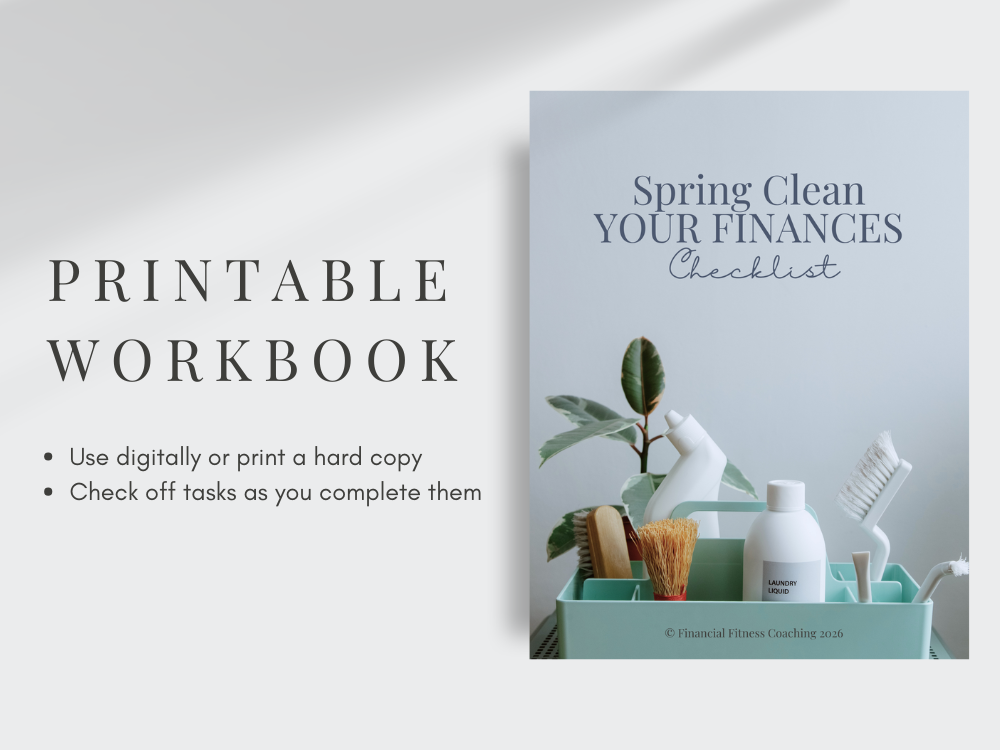
Spring isn’t just for cleaning out closets—it’s the perfect time to refresh your finances, too. Use this checklist to take action!
Download the checklist today!
We help people simplify their finances, take control of their money, and build a life they are excited about.

Business Financial Coaching
Business financial coaching gives you the systems, structure, and clarity to run a more profitable business and pay yourself regularly. We take a holistic approach — once your business finances are dialed in, we tackle your personal finances too.

Personal Financial Coaching
Personal finance coaching gives you the clarity and confidence to take real control of your financial life. With the right guidance and accountability, you'll stop reacting to your money and start directing it.

Stop wasting time pouring over spreadsheets and running 1000 calculations. It’s time to simplify your finances and get to clear decisions with confidence.

When you know your numbers, you can be assured that sustainable growth is a natural side effect. The more dialed into what it takes to operate a lean and fit business, you can make key decisions on the best places to invest in your growth.

It’s time to put more money back into your personal pocket and learn to manage it most effectively. With more money in your pocket, you have an incredible power to build generational wealth.
Schedule a Free Discovery Call
Taking the first step can feel big, we get it! That’s why this call is all about connection. You’ll share your money challenges with your potential coach.
Find the Right Fit for Where You Are
We’ll give you practical steps to move forward and suggest the product or service that’s the perfect fit for your needs and budget.
Master Your Money
Take control of your money with confidence and simplicity, so your finances work for you - both at home and in your business.
“I not only got my finances in order, but it’s also had a snowball effect in other areas of my life. It’s unbelievable how coaching has given me a positive outlook on my financial future and what a great feeling it is to not live paycheck to paycheck! This has been a very rewarding experience and one of the best decisions I have made!”





You know quarterly taxes are coming. You may even have the payment dates saved on your calendar. Then the deadline gets close, you check the business account, and suddenly you’re wondering where that money is supposed to come from.
Quarterly tax payments become harder to manage when the money earmarked for them stays mixed in with the cash you use to run your business. Preparing for taxes throughout the year can keep the deadline from catching you short on cash.
Instead of being surprised every quarter, make taxes part of your cash flow all year long.
Start with a manageable savings milestone and build your emergency fund over time. Use three to six months of essential household expenses as a starting point, then adjust the target to fit your household. Keep emergency savings in a separate, federally insured account that is easy to access.
Your business brought in $300,000 last year. Your P&L shows a profit. On paper, things look good. So why are you still checking your bank balance before paying yourself and bracing yourself for the next tax payment?
It doesn’t feel like a business bringing in this much revenue should be this tight on cash. Your first instinct might be, I need to make more money. Sometimes, more revenue really would help. Other times, the way money moves through your business deserves a closer look.
You know how it goes. You tell yourself this is the month you're finally going to save more. Then life happens the way it always does: the mortgage, utilities, groceries, a dinner out here and there, the everyday little purchases that never feel like a big deal in the moment.
Then the end of the month rolls around, and you look at what's left.
The problem with saving whatever is left is that "whatever's left" can look wildly different from one month to the next. A good month might leave you $500 to save. A rough one might leave $100 — or nothing at all.
One of the simplest ways to build better financial habits is to flip the order: save first, spend what's left. Automate the whole thing, and you stop having to make that decision every single month.
If your business has busy seasons and slow seasons, welcome to the club. Revenue is strong for several months, confidence is high, and spending expands. Extra payroll. New equipment. A bigger owner’s draw. Business is booming, right?
Then the calendar flips, and revenue drops exactly when it always has. Suddenly, you’re wondering whether you’ll have enough to cover the necessary expenses.
We’ve worked with plenty of business owners who ran into trouble not because the slow season hit, but because they made decisions assuming the busy season would last forever.
Seasonal cash flow doesn’t have to feel like riding a financial roller coaster. With a little cash flow planning, you can smooth out those highs and lows, making your business feel a whole lot more stable.
Debt has a way of kicking off a guilt spiral. You check your account balance, wince, and immediately start replaying every latte and impulse buy that got you here.
Then you decide all fun is officially off the table and call it a debt payoff plan.
The problem is that it doesn't work. Very few people stick with something that feels like punishment, no matter how much willpower they have. If paying off debt makes you feel like you're grounded from your own life, you'll eventually rebel against it.
We work with people every day who are ready to tackle debt, and the ones who succeed aren't the ones who white-knuckle their way through months of deprivation. They're the ones who build a plan that fits their actual life.
So let's get into what that looks like.
If you're a small business owner, you've probably had this thought at least once: “I'll just take whatever's left over at the end of the month."
It sounds reasonable... until the "left over" is either way too much or barely enough to cover groceries.
One month, you transfer $8,000 because business is booming.
The next month, you pay yourself $1,500 because a few clients paid late, and you don't want to touch the business account.
Before long, your personal finances are experiencing the same ups and downs as your revenue.
Too many business owners spend countless hours deciding what to charge clients, but very little time deciding what to pay themselves.
That's a problem. Your business exists to support your life, not keep you guessing every payday.
Creating a thoughtful compensation plan helps you build personal financial stability while giving your business the cash it needs to grow.
We learn exactly how you can make this happen in this blog.
A personal spending plan helps you decide where your money will go before the month begins. Reviewing your last three months of spending is one of the quickest ways to understand where your money is going. Focus your spending on the things that matter most to you and reduce spending that adds little value. Automatic transfers and bill payments make it easier to stay consistent without relying on willpower.
Building a personal money management system creates more financial confidence than relying on willpower or hoping everything works itself out. Getting your finances in order starts with a simple snapshot of your income, expenses, and debt.
Living paycheck to paycheck is often a structural problem, and small changes like automating savings and building a starter buffer can create real breathing room. The best money system is one that reflects your values, priorities, and lifestyle rather than following someone else's financial rules.
Are you ready to get your finances in order without overhauling your entire life? (YES, it is possible)! Check out our recent blog to read how you can stop winging it and build a real system for your money.
Many small business owners assume that once revenue increases, the financial stress will finally ease. Then they hit a bigger sales month and somehow still feel anxious every time payroll runs or a credit card bill comes through.
That disconnect frustrates people more than they want to admit.
On paper, the business can look successful. Clients are coming in, and revenue is growing. Maybe it's even the "best year yet." Meanwhile, the owner is sitting at their kitchen counter trying to figure out why money still feels tight.
That's usually a cash flow problem. The good news: cash flow is absolutely manageable once you understand what's going on and build a system that works for your specific business. That's exactly what this blog is for.
Your side hustle is picking up steam, and clients are coming in. You’re doing the math in your head and thinking, “I’m bringing in $4,000 a month, and my paycheck from my day job is $3,500. I’m close.”
In reality, you’re not quite there yet.
Understanding why is what separates entrepreneurs who make a smooth transition into self-employment from those who have to crawl back to a salaried job six months later.
Your business revenue is not your paycheck. Confusing the two is one of the most common mistakes people make before going out on their own. If you don’t separate them, it’s easy to overestimate how “ready” you are.
So, before you send that “I quit” email, let’s take a closer look at what your numbers really need to support.
You can have great revenue and still feel completely lost with your money. Maya knew this better than most.
She ran a thriving language and communication services business. She cared deeply about doing things the right way — she even taught herself bookkeeping. She had an accountant, a bookkeeper, and someone handling accounts receivable. By most measures, she had her bases covered and then some.
At the same time, Maya had no real idea of where her money was going, whether her pricing made sense, or what to do when extra cash showed up. She was working seven days a week, burning herself down to the ground, and still couldn’t shake the feeling that something was fundamentally off.
When a decision she made to fix her financial stress ended up creating a bigger problem, she reached out. Her goal, in her own words: I want to control my finances better and start running my business professionally.
Read to full blog to see how Maya made several major shifts through coaching with Financial Fitness to completely turn around the financial picture of her business and restore her sense of peace.
Summer is coming, and with it comes a rare window of opportunity. The schedules loosen, the pace changes, and suddenly there’s time for conversations that don’t always happen during the school year. While it’s tempting to let everyone just relax, summer is a great time to help your teen start building real-world money habits.
Skip the lectures and long talks — teens will tune those out. Instead, use everyday decisions to bring money into the conversation. Teens build financial literacy through real experiences, and summer offers lots of those. Read the blog to find out real-life, practical ways to talk to your teen about money!
Paying off back taxes is more achievable than most business owners realize, and it often takes less time than you might think. With the right systems in place, you can pay off debt, raise your own pay, and make your business stronger all at once.
Read the blog to hear how one client paid off back taxes, doubled her cash on hand, and started paying herself consistently with the help of financial coaching with Financial Fitness Coaching.
Financial coaching isn't about taking the fun out of your money. It's about making sure your spending matches your values in a way that actually feels good, not restrictive or punishing, but intentional.
Money touches nearly every adult decision we make, from career moves to marriage and retirement, yet most of us were left to figure it out through trial and error.
If we could change what we learned in school, here are five financial lessons everyone should have been taught, but weren’t.
Financial “upsets” rarely materialize out of thin air. They come from expenses we knew were coming, just not exactly when, how much, or all at once — tax bills, spring break trips, and that strange noise the car’s been making.
Spring is the perfect time to regroup, zoom out, and make sure your financial plan can handle the busy months ahead.
Most financial success stories skip the messy middle. They jump from "rock bottom" to "totally crushing it" with nothing but a motivational quote in between. Real life isn’t like that, and it's definitely not how Tim and Stacy's story played out.
When Tim and Stacy first reached out in November 2024, they weren't looking for a financial miracle. They just wanted to break even and maybe sleep through the night without anxiety waking them up at 3 AM.
There’s a real difference between being frugal and being cheap, and knowing it can change how you spend and how you feel about it. Your financial habits should feel good.
Let’s look at what frugality and cheapness really mean, and how our views on “free” things reflect our relationship with money.
Dylan had everything you're supposed to have to be financially successful: a well-paying corporate job, valuable professional expertise, and the work ethic to shoulder a second job when things got tight.
Despite all that, he was drowning.
Most people think financial change starts with spreadsheets or cutting back on coffee. In reality, it begins in your mind long before anything shows up in your bank account. Your beliefs about money influence everything: what you earn, what you keep, what you avoid, and how confident you feel making financial decisions.
Every business hits a point where the money feels tight, the fun feels far away, and you start Googling things like “should I close my business” at two in the morning.
First, can we acknowledge how courageous you are for even asking this question? Most business owners would rather eat glass than admit they're considering closing up shop. But here you are, being honest with yourself. That takes guts.
The traditional concept of working a 9-5 job for approximately forty years until retirement is slowly losing its status as the standard way of living. Many workers are seeking time freedom, early retirement, flexible and remote working conditions, and ultimately, they want their money to work for them (not the other way around). If you want to step outside (or even just supplement) the traditional employment framework, discover our tips for obtaining a side hustle and creating multiple income streams.
If you're making good money and managing it responsibly, that guilt isn't serving you. In fact, it's probably making your relationship with money worse, not better. And I'm willing to bet you didn't work this hard to feel bad every time you enjoy the fruits of your labor.
So, how do you kick the guilt and actually enjoy your money? Let’s dig in.
November sits in a sweet spot. You have 10-11 months of data to analyze, trends are clear, and you can still implement changes that impact your year-end numbers. More importantly, you can start shaping 2026 before the noise of a new year drowns out strategic thinking.
For established business owners generating significant revenue, this month represents your best opportunity to close out the year strong while building momentum for what comes next.
So exactly how do you budget for holidays without feeling like you're sucking all the joy out of the season?
The key is planning before the chaos begins — and aligning your finances with your values, rather than letting the holiday frenzy hijack your budget.
Let's talk about how to budget for holidays, give meaningful gifts, and actually enjoy the season without the financial stress.
The holidays have somehow morphed from a season of connection and gratitude into a competitive sport of gift-giving excess. But what if I told you there's a different way to celebrate? One that fills your heart instead of emptying your bank account?
Let's talk about choosing presence over presents this holiday season.
Whether you love or loathe them, financial reports are the heartbeat of your business. They tell you what's really happening with your money so you can make informed decisions instead of flying blind and hoping for the best. Think of them as your business's vital signs. You wouldn't ignore chest pains, so don't ignore what your numbers are telling you.
Hold up there, spontaneous traveler. Before you let your credit card take a vacation it can't afford, let's talk about how smart travelers like you can see the world without your bank account crying tears of regret.
If you’ve ever planted a garden, you know that results don’t happen overnight. You water, you weed, you wait. Then, surprise! Those little sprouts you forgot about suddenly bloom into a whole tomato plant (hopefully before the squirrels get to it).
Money works the same way. The seeds you’ve been planting — retirement contributions, debt payoff, savings habits — don’t grow instantly. They grow quietly in the background while you’re busy running your business, raising kids, or just trying to get through another tax season.
You're scrolling through Instagram at 2 AM, and suddenly you're hit with wanderlust so strong you could book a flight to Italy right now. Your finger hovers over that "Book Now" button, and you think, "I work hard, I deserve this."
Hold up there, spontaneous traveler. Before you let your credit card take a vacation it can't afford, let's talk about how smart travelers like you can see the world without your bank account crying tears of regret.
Will your business continue to support your family long after you’ve stepped away? Will it continue helping your community? Or will it simply fade away with your final invoice?
Let’s talk about making sure your business tells the story you want it to tell — now and years down the road.